Travel to Netherlands
Day 5 Driebergen - Edam - Volendam - Zaanse Schans - Driebergen (185 Km.)
(in 77 Km.) Edam: Edam is a small town in North Holland with a history that dates back to the 12th century. Originally a fishing village situated on the Zuiderzee, Edam grew rapidly thanks to shipbuilding and trade. By the 14th century, it was granted city rights and became a thriving port. The construction of a dam on the River E (from which the town takes its name) was key to its development. In later centuries, Edam became internationally recognized for its cheese production, particularly Edam cheese, which contributed significantly to the local economy. Although the town’s port activity declined after the damming of the Zuiderzee, Edam has preserved its historical buildings, canals, and traditional cheese-making heritage.

Edam - Kwakelbrug and Speeltoren
We began our visit at the Kwakelbrug, a traditional drawbridge located in the center of town, near the canals. This manually operated footbridge is still functional and offers access to the older sections of Edam. Close by, we visited the Speeltoren, the former bell tower of a now-demolished church. The tower features a carillon with mechanical figures and is part of the Edams Museum. Continuing through the narrow streets, we arrived at Jan Nieuwenhuizenplein, the central square where the cheese market (Kaasmarkt) takes place every Wednesday during the summer months. This market recreates the historical method of cheese trading, with costumed actors and wheelbarrows transporting cheese to and from traditional weighing scales.

Edam - Cheese market (Kaasmarkt)
We then walked alongside the canals, following the layout of the old town. Many of the residential buildings along the canals have characteristic 17th-century façades. Our route led us to the Church of Saint Nicholas (Grote Kerk van Edam), the largest church in Edam. Originally built in the 15th century and expanded in later decades, the church is known for its wooden vaulted ceilings and historic stained-glass windows. Although much of the original interior has been preserved, the building no longer functions solely for religious services but is also used for cultural events and exhibitions. The church is located near the western edge of the historical center.

Edam - Voorhaven canal
As we made our way back toward the parking area, we stopped for a visit at the Henri Willig Cheese Shop (Kaasspeciaalzaak), where we participated in a brief cheese tasting and made several purchases. This shop specializes in regional cheeses, including the traditional Edam round cheese and flavored varieties. It also offers vacuum-sealed products for transport, as well as accessories related to cheese cutting and preservation. The store is located in one of Edam’s historic merchant houses, and the tasting room includes information panels describing the cheese-making process and the company’s history. After finishing our visit, we returned to the parking area and continued our itinerary. We hop on our bikes and ride to nearby Volendam.

Volendam Haven
(in 6 Km.) Volendam: Volendam is a fishing village located on the western shore of the Markermeer in North Holland. Originally, it served as the harbor for the nearby town of Edam. In the 14th century, when Edam built a new canal and closed off its original harbor, the site was settled by local farmers and fishermen. Over time, Volendam developed a distinct identity, especially noted for its Catholic traditions, traditional wooden houses, and unique local costume. In the 19th and early 20th centuries, it attracted numerous artists and photographers, and later became a popular tourist destination, known for its harbor, fresh seafood, and music scene. Despite modern development, the town has preserved many historic elements of its fishing heritage and community life.
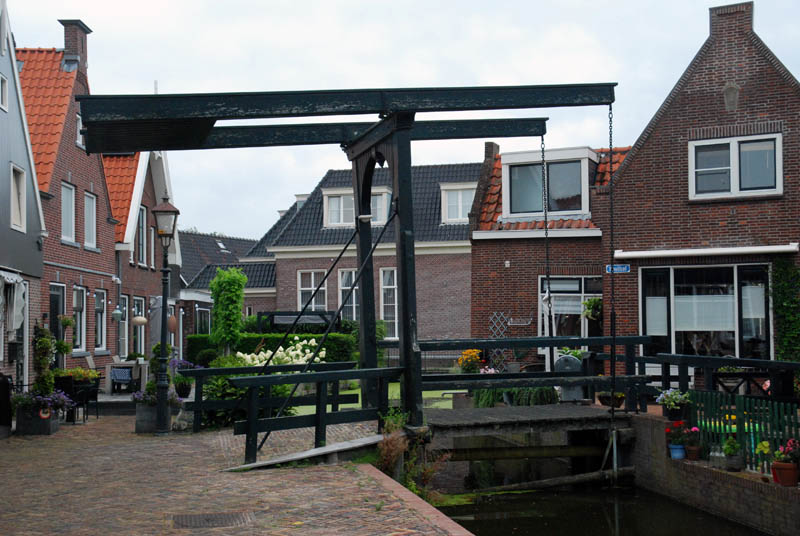
Volendam - Het Doolhof
We began our visit along the Volendam Haven, the harbor promenade lined with seafood stalls, souvenir shops, and traditional boats. From there, we visited the Volendam Cheese Museum, which offers an overview of the Dutch cheese-making process, with displays on the history of cheese production and tools used over the centuries. Leaving the busy harbor area, we walked inland toward the St. Vincentiuskerk, a Catholic church built in the 19th century. Located in the village center, the church features neo-Gothic architecture and stained-glass windows, and serves as a local parish church. Continuing into the historic residential area known as Het Doolhof, we walked through narrow, winding streets lined with wooden houses typical of Volendam’s older neighborhoods. We concluded our visit at the Stolphoevekerk, a wooden church built in 1658 that originally served as a Protestant place of worship. It is one of the oldest buildings in the town and has been preserved with its original structure, including its wooden tower and thatched roof.

Zaanse Schans
(in 25 Km.) Zaanse Schans: Zaanse Schans is a historic open-air museum located in the Zaan region, near Zaandam, in the province of North Holland. It was developed in the 1960s as a cultural preservation project to showcase the traditional architecture and industrial heritage of the Zaanstreek. During the 17th and 18th centuries, this region became one of the earliest industrialized areas in Europe, powered by hundreds of windmills used for sawing wood, grinding spices, pressing oil, and producing paint. Many of the buildings currently at Zaanse Schans were relocated there from different parts of the region and restored to their original form. Today, the site functions as both a tourist attraction and a working village, featuring traditional houses, functional windmills, small museums, and craft demonstrations reflecting daily life in the Dutch Golden Age. We began our visit at the main entrance and followed the footpath along the river Zaan, stopping first at De Kat, one of the few remaining windmills that still grinds pigments for paint production. We continued to De Zoeker, which is used to produce oil from seeds. Inside the windmills, staff demonstrated the inner mechanisms and explained their original use.

Zaanse Schans
Next, we reached the Clog Workshop, where you can watch a live demonstration of wooden shoe carving using mechanical tools. We also entered the Cheese Farm Catharina Hoeve, where staff in traditional costume offered tastings and explained cheese-making techniques. After crossing the small wooden bridge, we saw the Zaanse Time Museum, dedicated to historical Dutch clocks and timekeeping devices. Throughout the site, we observed workers maintaining gardens, small farms, and craft workshops, including a pewter foundry and bakery museum. We concluded our walk along the waterfront, where several historic warehouses and green wooden houses face the river, before exiting the site through the visitor center.
(in 77 Km.) Driebergen: We return again to our accommodation.